
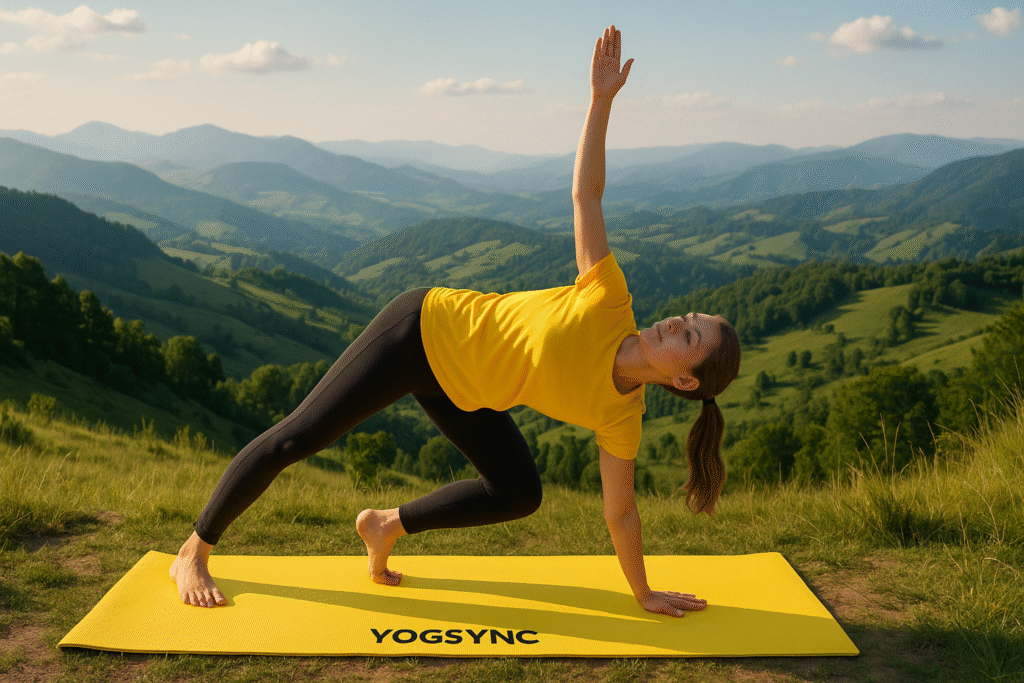
Embrace Balance and Lightness with Half Moon Pose
Half Moon Pose is a gentle way to build balance, strength, and flexibility all while feeling light and open like the moon itself. Perfect for beginners, it helps you ground through one leg while expanding your chest, hips, and core with ease.
by Yogsync Team
What’s the better way to understand the Half Moon Pose than picturing yourself standing tall, one leg rooted firmly to the earth while the other stretches toward the horizon? Your arms extend like wings, and your body aligns in a graceful arc. At that moment, you are not just practicing yoga but also embodying Half Moon Pose (Ardha Chandrasana), a posture of strength and surrender, effort and ease. It offers a powerful lesson of finding stability even in moments of movement. This pose invites you to feel light, open, and energized, as the glowing half-moon it is named after. Come, let us unwrap everything it has to offer!
Origin & History
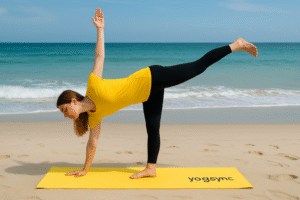
To understand it better, you can break Ardha Chandrasana down into multiple Sanskrit terms, making it easier to comprehend. Ardha in it means half, Chandra refers to the moon, and Asana is the pose. This yoga posture reflects the balance and calm associated with the lunar energy in yogic philosophy. The moon, often symbolic of intuition, grace, and cooling energy, inspires the open and expansive nature of this pose.
Its traces can’t be found in medieval Hatha yoga texts. The pose was codified in the 20th century, largely through the teachings of modern yoga pioneers like B.K.S. Iyengar. Iyengar emphasized alignment and balance in this asana, introducing it to students through his book Light on Yoga. Since then, Half Moon Pose has become a staple in many yoga sequences, praised for its dynamic combination of grounding and lightness.
Benefits of Half-Moon Pose
Half Moon Pose is more than just a balance challenge; it offers full-body engagement and mental clarity. Here is how it benefits the body and mind:
-
Improves Balance and Coordination
Balancing on one leg while extending the limbs requires strong neuromuscular coordination. Practicing this pose regularly enhances proprioception, your sense of where your body is in space, leading to better balance and control in daily movements.
-
Strengthens the Lower Body
The standing leg bears your body’s weight, strengthening the glutes, quadriceps, hamstrings, and calves. The raised leg, though lifted, must also remain active to keep the body stable and aligned.
-
Opens the Chest and Shoulders
By rotating the torso upward, Half Moon Pose expands the chest, improves posture, and strengthens the upper back muscles. It can be helpful for people who spend long hours hunched over desks or devices.
-
Stimulates the Core
Maintaining the lifted position engages the abdominal and oblique muscles, building a strong and supportive core.
-
Enhances Hip and Spine Flexibility
The asymmetrical stretch encourages flexibility in the hip joints and spinal rotation, which can help reduce lower back stiffness.
Variations for All Levels
Everyone’s body is different, and the Half-Moon pose offers a range of modifications and variations to suit all abilities:
-
Use a Block for Support
If reaching the floor feels too far, place a yoga block under the lower hand. This brings the ground closer and supports balance while maintaining spinal alignment.
-
Wall Support
Practicing against a wall adds stability and helps beginners get comfortable with the shape of the pose. The wall can support the back, raised leg, or both.
-
Bent Standing Leg
If flexibility in the hamstrings is limited, slightly bending the standing leg can ease tension and improve balance without compromising the pose’s integrity.
-
Extended Variation
Advanced practitioners can extend the top arm overhead (toward the front of the mat) for a deeper side-body stretch and more core engagement.
Conclusion
Half Moon Pose teaches us that balance is less about rigidity and more about adaptability. It invites us to shine light into the spaces we often ignore—our strength, our focus, and our courage to grow. Whether you’re finding your footing or soaring in the full expression of the pose, each moment in Ardha Chandrasana is a chance to discover equilibrium from the inside out.
So take a breath, lift your heart, and let your body reflect the elegance of the moon poised between light and shadow, grounded and free.
Also, if you liked this post, stay connected with YOGSYNC for similar updates on yoga.
Share article



Related Articles
Embrace the Magic of Backbends with Camel Pose
Ease into your yoga journey with Camel Pose a gentle backbend that opens your chest,…
Warrior 3 Pose: Finding Balance Through Strength and Stillness
Step into Warrior 3 Pose and discover strength in stillness this beginner-friendly balance posture tones…
Find Lasting Stability and Focus with the Tree Pose Yoga Flow
Tree Pose is a gentle way to build balance and focus helping you stand tall,…