
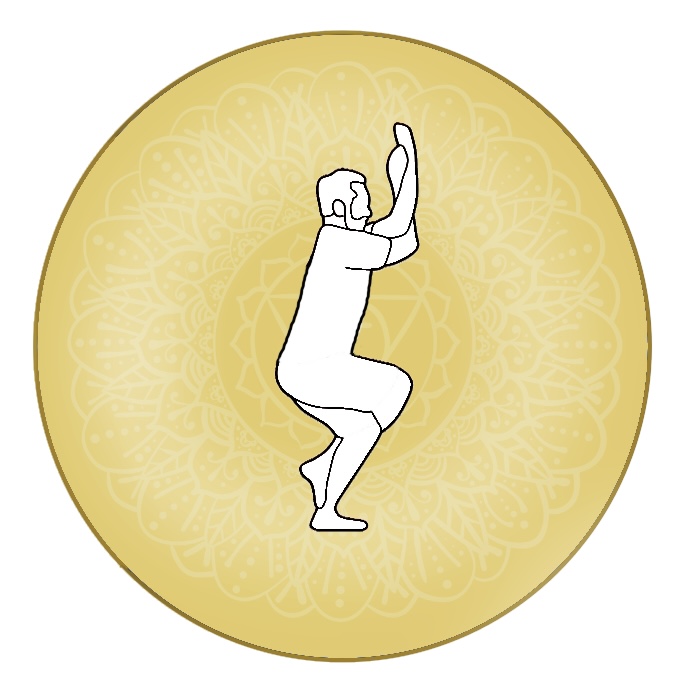
Steps for Eagle Pose:
- Start in Tadasana (Mountain Pose) with your arms by your sides.
- Slightly bend your knees and shift your weight onto your left foot.
- Cross your right thigh over your left thigh. If possible, hook your right foot behind your left calf.
- Extend both arms forward, then cross your left arm over your right at the elbows.
- Either bring the backs of the hands together by bending the elbows or keep wrapping until the palms are pressed against one another.
- Lift the elbows to shoulder height while keeping the shoulders relaxed.
- Sit slightly deeper into your standing leg, engaging your core to stay balanced.
- Hold the pose for 5–10 breaths, keeping your gaze steady at a fixed point.
- For the release, unwind your arms and legs and go back to Mountain Pose.
- Repeat the pose on the opposite side.
DOs and DON’Ts:
DOs:
- Engage your core and inner thighs to maintain balance.
- Keep your spine tall and shoulders relaxed away from your ears.
- Focus your gaze (drishti) at eye level to aid concentration and stability.
- If you are a beginner to balance poses, make use of a wall or chair for assistance.
- Modify by crossing only the thighs or arms if a full bind is not accessible.
DON’Ts:
- Avoid leaning forward. The upper body should remain straight and positioned directly above the hips.
- Don’t force the foot behind the calf if it compromises your balance.
- Don’t shrug your shoulders or clench your neck.
- Don’t lock the standing knees. Keep a soft micro-bend.
- Don’t wait in anticipation; keep a calm and steady rhythm at all times.
Share Pose


