
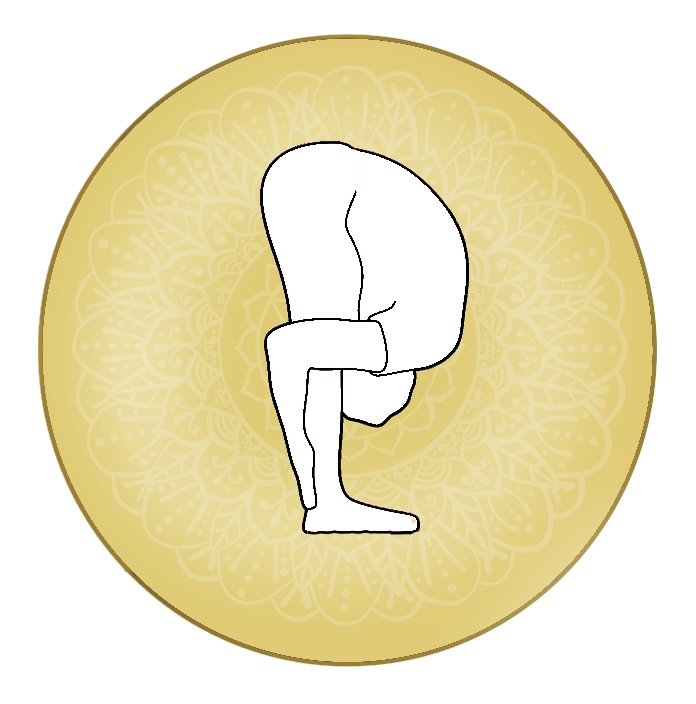
Steps for Standing Forward Bend Pose:
- Begin in Tadasana (Mountain Pose), standing tall with feet hip-width apart and arms by your sides.
- To lengthen your spine, take a deep breath and lift your arms above your head.
- As you exhale, bend forward from the hips rather than the waist, maintaining a long spine.
- Bring your hands down to the floor, your ankles, or place them on blocks if needed; let your head hang freely.
- Keep a gentle bend in the knees if your hamstrings are tight or to avoid strain in the lower back.
- Allow the weight to shift slightly forward into the balls of the feet without lifting the heels.
- Relax the neck, jaw, and shoulders.
- Stay in the pose for 5–10 breaths, deepening the stretch on each exhale.
- Bring yourself back to Tadasana by using your core, taking a deep breath, and slowly rolling up each vertebra one at a time.
DOs and DON’Ts:
DOs:
- As you fold, extend your spine and lead with your hips.
- If necessary, keep your knees slightly bent to keep your back flat.
- To relieve tension in the upper spine and neck, let the head hang.
- If you are unable to reach the floor comfortably, use props such as blocks beneath your hands.
- Breathe deeply to support a calm nervous system and gradual release.
DON’Ts:
- Do not lock your knees, because doing so might strain the joints and lower back.
- Don’t round your spine to reach the floor. Prioritize length over depth.
- Avoid bouncing or jerking to deepen the stretch.
- Don’t compress the belly too tightly if you have digestive issues—bend the knees slightly.
Avoid this pose during late pregnancy or with untreated lower back injuries.
Share Pose


