
Lift Like a Serpent and Unfold Energy with Cobra Pose Yoga
Snakes symbolize transformation, rebirth, healing, temptation, and more. If we talk about Cobras, in particular, they resemble royalty, power, and wisdom. Over here, while you’re reading this post, they will remind you to stretch your head higher, towards the sky in the Cobra Pose. The Cobra Pose is one of the most comprehensive yoga positions […]
by Yogsync Team
Snakes symbolize transformation, rebirth, healing, temptation, and more. If we talk about Cobras, in particular, they resemble royalty, power, and wisdom. Over here, while you’re reading this post, they will remind you to stretch your head higher, towards the sky in the Cobra Pose.
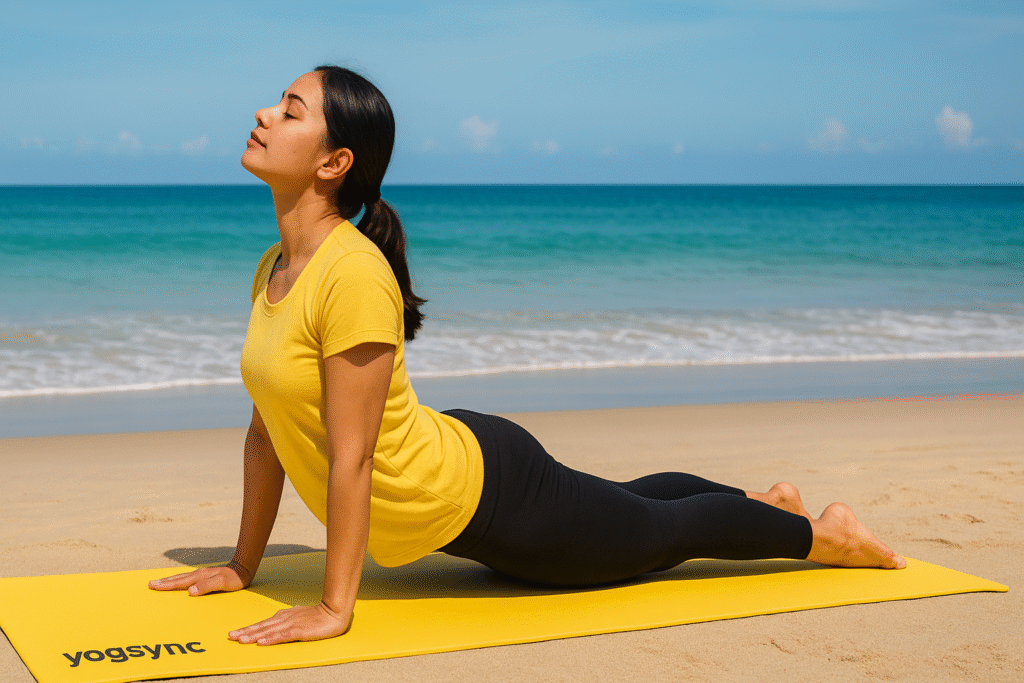
The Cobra Pose is one of the most comprehensive yoga positions with promising benefits. This beginner-level backend is also the seventh posture of the Sun Salutation sequence as an alternative for upward-facing dogs. This posture resembles a Cobra lifting its head, promising spinal flexibility along with other benefits.
Read this post to understand the Cobra Pose, its benefits, adaptations, and more. Let us go, shall we?
Origin

The term Cobra Pose can be called Bhujangasana in Sanskrit. It can be broken down into two terms- Bhujanaga, which means snake, and Asana, which refers to seat or posture. Its traces can be found in verses 42-43 of chapter 2 of Gheranda Samhita, a hatha yoga text from the 17th century. It was named Sarapasana in the Sritattvanidhi, a treatise from the 19th century. Sarpasana can be broken as sarpa or snake and asana as posture. Similarly, other traces are in the YogaSopana Purvacatuska.
Benefits
From improved flexibility to better focus, yoga covers various aspects of your physical and mental well-being. Let us focus on the benefits of the Cobra Pose to your well-being. Here we go:
Helps with the Back Pain
The Cobra Pose helps with back pain as you stretch your lower back muscles while practicing this yoga posture. In fact, this has been shown in a study, which also specified a practice of 12 weeks to experience the benefits. The Cobra Pose also improves spinal flexibility, which helps avoid stiffness in the movement.
Improves Flexibility
You just learned about its benefits for spinal flexibility, but let us tell you how that happens. The Cobra Pose promotes symmetrical stretching and contracts different involved muscles. For example, the upper back muscles and shoulders are contracted when the rib cage and the chest stretch. As a result, your joint muscles, such as hips, neck, and shoulders, become more flexible.
Stretches Anterior
The anterior or front of your body stretches in the Cobra pose. This results in the stimulation of your retinaculum, something that you generally do not pay attention to. Your arms stretch, too, while your biceps and triceps engage, all of which can contribute to the strengthening and stability of your shoulders. Abdominal and pelvic stretching can help with menstrual discomfort in women.
Promotes Awareness and Alignment
The safe practice of the Cobra Pose requires you to align your body. Additionally, it promotes awareness in your body, which happens when you focus on physical sensations throughout the pose. You may be able to identify your repressed or hidden emotions. Breath awareness is also a part of the Cobra pose.
Stimulates Abdomen
The Cobra pose requires stretching your lower abdomen, which restores many organs. It includes the reproductive, digestive, and urogenital organs. The yoga pose opens, aiding your circulatory and respiratory systems. All this happening promotes better blood circulation throughout the body.
Improves Posture and Lowers Fatigue
Lengthening your back and abdominal muscles can help you with your back pain while enhancing your posture. A good posture can promise better spinal health while lowering the strain on your back. The blood circulation in the yoga pose can make you more energetic and thus reduce your fatigue.
Variations of the Cobra Pose
Variations of any yoga pose can let us explore its many other versions for comprehensive practice. In this section, let us see how we can practice the Cobra Pose differently.
- Low Bhujangasana (Gentle Cobra or Baby Cobra)
This variation allows you to bend your elbows slightly; you can keep them closer to your body. You can practice low Bhujangasana if you have issues with your lower back or are just starting with yoga.
- Sphinx Pose
In the Sphinx Pose, you can let the group support your forearms and align your elbows and shoulders. This is a softer version of the Cobra Pose that allows you to practice without straining your lower back further.
- Dynamic Bhujangasana
In this yoga pose, you lower your chest and lift your head repeatedly. This results in a dynamic backbend. This includes performing a wave-like or flowing movement with your spine. Spinal mobility is a notable benefit of this posture.
Conclusion
Bhujangasana, or the Cobra Pose, provides flexibility and strength. Collectively, they contribute to a sense of self-efficacy and control. Bhujangasana, or the Cobra Pose, is more than a mere yoga practice. Its ability to heal back pain and relieve spinal mobility has made it more adaptable in other areas, such as physiotherapy.
The Cobra Pose is a beneficial and accomplished asana that aids one’s physical and mental well-being. It is time you start including it in your fitness regimen. If you want to learn about performing it, please refer to our detailed guide on the Cobra Pose.
You can also stay in touch with us at YogSync for more yoga-related updates and information.
Share article



Related Articles
Warrior 1 Pose Yoga Origin Story with Balance and Inner Calm
Start your yoga journey with Warrior One Pose a grounding stance that builds strength, improves…
Child’s Pose Yoga History and Deep Mindful Benefits Explained
Child’s Pose is a gentle beginner posture that stretches your back, shoulders, and hips while…
Warrior 3 Pose: Finding Balance Through Strength and Stillness
Step into Warrior 3 Pose and discover strength in stillness this beginner-friendly balance posture tones…