
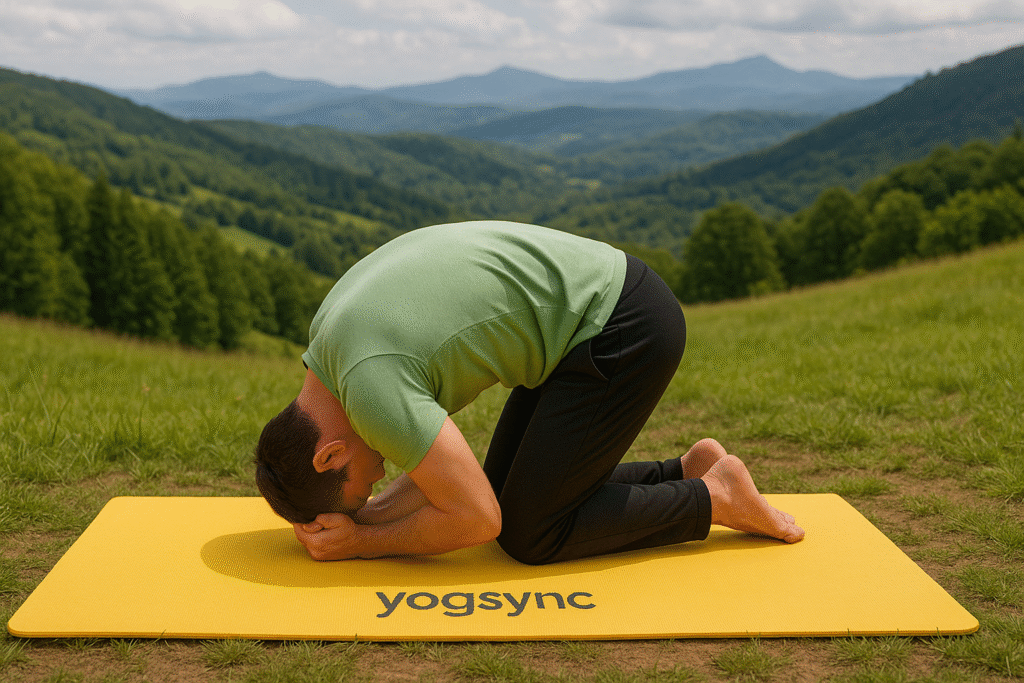
Curling In to Reconnect and Release with Rabbit Pose
Rabbit Pose offers a gentle way to release spinal tension, calm the nervous system, and reconnect with your breath a soothing balance of surrender and stretch for beginners.
by Yogsync Team
Some days, the most powerful thing you can do is curl inward. In Rabbit Pose, or Shashankasana, you fold down into yourself, not to retreat, but to release. The spine rounds, the crown of the head presses gently to the mat, and your breath moves with intention. It’s a posture that feels like a deep exhale for your back, neck, and nervous system. For beginners, Rabbit Pose offers a beautiful balance of surrender and stretch. It’s a gentle reminder that going inward is sometimes the boldest move of all. Let’s dive deeper into this pose and learn about its origin, benefits, and possible variations.
Origin & History
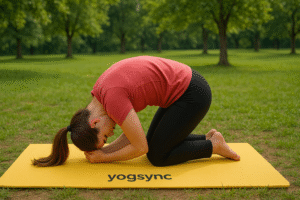
Rabbit Pose, or as we say it in Sanskrit- Shashankasana or Sasangasana, is a staple in Bikram Yoga sequences. The Sanskrit word shashanka translates to “moon” or “hare,” symbolizing serenity and inward reflection. Historically, this pose was used to quiet the mind before or after intense backbending postures, promoting a balanced flow of energy.
While Rabbit Pose may not be found in medieval yoga texts like the Hatha Yoga Pradipika, it has been widely taught in modern yoga schools due to its calming effects and therapeutic benefits. Teachers in traditions like Sivananda and Bikram yoga have emphasized it for spinal health and emotional balance. Its gentle, folded posture is often compared to a resting animal—quiet, yet full of life and awareness.
Benefits of Rabbit Pose
Though it looks simple, Rabbit Pose offers profound physical and emotional benefits. It’s particularly beneficial for people who experience back tension, mental fatigue, or overstimulation.
-
Elongates and Releases the Spine
During Rabbit Pose, you round your back and tuck your chin, which helps decompress the vertebrae, relieving spinal tension and creating space in the spine. This is especially helpful after long periods of sitting or intense backbends.
-
Stimulates the Crown Chakra
With the crown of the head pressing into the mat, this pose activates Sahasrara, the crown chakra, believed to be associated with awareness and spiritual connection. Energetically, it encourages clarity and calm.
-
Improves Digestion and Organ Function
The mild compression of the abdomen stimulates internal organs and may help with sluggish digestion. The deep forward bend can promote blood flow to the digestive tract.
-
Relieves Tension in the Neck and Shoulders
By relaxing into the posture and letting gravity assist, Rabbit Pose helps release tightness around the neck, shoulders, and upper back—areas where we often store stress.
-
Calms the Nervous System
As a forward fold, this posture activates the parasympathetic nervous system (your “rest and digest” mode), making it ideal for reducing anxiety and promoting deep relaxation.
-
Enhances Breath Awareness
With the belly compressed, breath becomes more intentional and focused, helping practitioners become more attuned to diaphragmatic breathing.
Variations for All Levels
Whether you’re just starting or looking to refine your practice, Rabbit Pose offers adaptable variations that meet your body where it is.
-
Classic Rabbit Pose (Sasangasana)
After being in Child’s Pose, you can switch by grabbing your heels, tucking your chin, and rolling the crown of your head at the mat while lifting the hips. Keep your arms engaged and grounded for balance.
-
Supported Rabbit with a Blanket
Place a folded blanket under your head or knees to reduce pressure and support the cervical spine, especially for beginners or those with neck sensitivity.
-
Extended Arm Variation
Instead of holding the heels, you can extend your arms forward (like in Child’s Pose) while rounding the back. This provides a softer version that still decompresses the spine.
-
Child’s Pose Transition
Move in and out of Rabbit Pose by transitioning from Balasana (Child’s Pose). This helps maintain the calm energy of the sequence and prevents straining the neck.
-
Wall-Assisted Rabbit Pose
If balance is a concern, place your back close to a wall for extra support when lifting the hips.
Conclusion
Rabbit Pose is a pose that encourages you to fold in, release tension, and reconnect with your breath. For beginners, it’s a safe space to explore surrender and spinal mobility. Seasoned practitioners can find it as a return point for grounding and reflection. The world constantly asks you to move outward, and there, Shashankasana reminds you of the restoration that comes with turning inward.
Whether you hold it for five breaths or flow through it in a sequence, Rabbit Pose invites you to find calm through conscious curling, softness, and stillness.
Share article



Related Articles
Understanding the Origin, Benefits, and Variations of Revolved Easy Pose
Discover the calming power of Revolved Easy Pose a gentle twist that eases your spine,…
Unlock Your Hips and Release the Heart With Pigeon Pose
Ease into Pigeon Pose to gently open your hips, release lower-back tension, and calm your…
Flow Like a Gentle Wave in the Downward Facing Dog Position
Start your yoga journey with Downward-Facing Dog a gentle yet energizing pose that stretches your…