
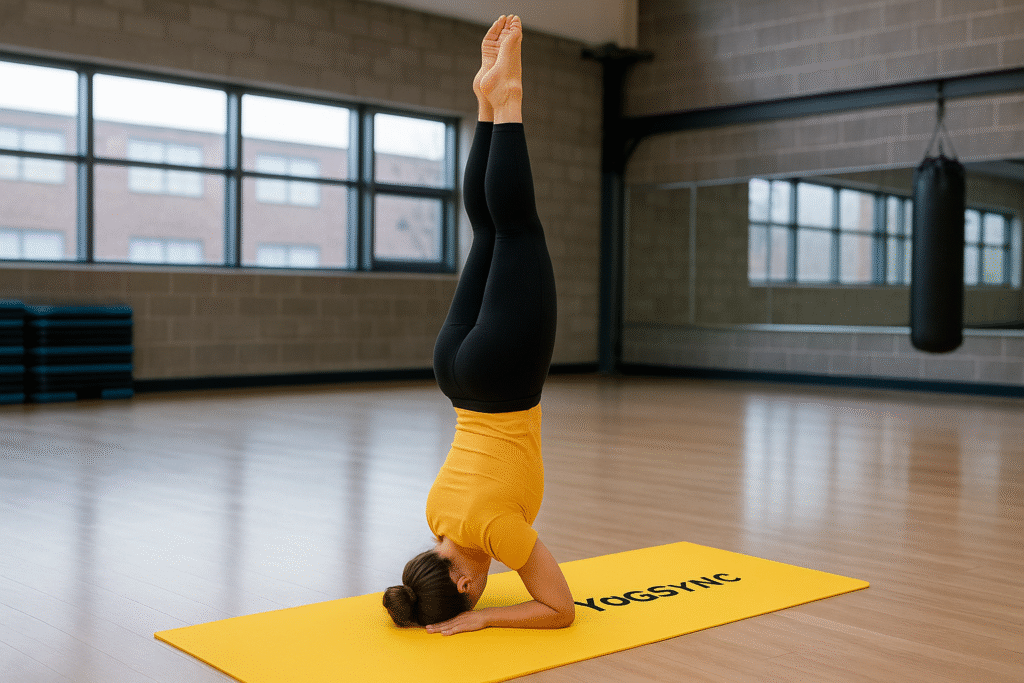
Turning Your World Upside Down Intentionally with Supported Headstand Pose
Discover the Supported Headstand Pose a gentle introduction to inversions that builds confidence, strengthens your core and shoulders, and teaches balance with patience and calm breath.
by Yogsync Team
The first time you lift your feet off the ground and balance upside down, something inside shifts. Your breath slows, your mind sharpens, and your body learns to trust itself in a brand-new way. Welcome to Supported Headstand Pose, or Salamba Shirshasana—a posture that may look intimidating but offers a rewarding experience when practiced with patience and support. It is also referred to as the king of all asanas, which doesn’t seem surprising considering how it teaches strength, focus, and humility. For beginners on the yoga journey, it is not about flipping upside down right away but about building the quiet confidence to rise with control.
Origin & History
The Supported Headstand is known in Sanskrit as Salamba Shirshasana (Salamba meaning supported and Shirsha meaning head). This yoga posture has been revered for centuries as one of yoga’s most powerful inversions. References to headstands can be found in classical Hatha yoga texts such as the Hatha Yoga Pradipika under a different name. In it, this pose was seen as a way to reverse aging and rejuvenate the body by improving blood circulation and awakening higher states of consciousness.
Historically, the pose was reserved for seasoned practitioners due to its intensity and need for control. However, modern yoga, with the influence of teachers like B.K.S. Iyengar popularized the supported variation. It allowed students to access the benefits of inversions safely using forearm support and alignment principles.
Benefits of the Supported Headstand Pose
Though it may seem like a party trick, the Supported Headstand is one of the most transformative yoga postures when practiced mindfully. Its benefits touch nearly every system of the body:
-
Boosts Circulation
By reversing the body’s orientation, this pose sends fresh oxygenated blood to the various organs, which may offer numerous health benefits.
-
Strengthens the Upper Body and Core
Holding yourself upside down requires strong shoulders, arms, and abdominals. Practicing regularly builds significant strength and stability in these areas.
-
Stimulates the Lymphatic System
Inversions assist in draining lymphatic fluid and toxins from the body, contributing to a healthy immune system and reducing swelling in the lower limbs.
-
Improves Posture and Alignment
With proper guidance, this pose aligns the spine and helps correct postural imbalances, especially when paired with shoulder-opening practices.
Variations for All Levels
Starting your headstand journey doesn’t mean you need to flip upside down on day one. You can opt for these variations, too:
-
Wall-Supported Headstand
Practicing with your back to a wall helps you feel secure while working on alignment. It allows gradual weight shifting and reduces the fear of falling.
-
Tripod Headstand (Sirsasana II)
This variation involves placing the hands flat on the floor like a triangle with the head. It’s generally more accessible for those with wrist or shoulder strength.
-
Dolphin Pose as a Prep
This forearm-based pose strengthens the shoulders and arms while mimicking the headstand foundation. It’s excellent for building the necessary base before inverting.
-
Use of Props
Cushioning the crown of the head with a folded blanket or using a yoga bench or headstand stool can offer additional comfort and reduce cervical pressure.
Conclusion
Supported Headstand Pose is about turning inward, facing your fears, and reconnecting with your breath in a new dimension. It reminds us that growth often comes when we flip our perspective. Whether you’re just starting with Dolphin Pose or beginning to float your feet, each step is a victory worth celebrating. Let Salamba Shirshasana be a pose of exploration rather than expectation, and trust that your strength, like your practice, will rise in time
Share article



Related Articles
Embrace Balance and Lightness with Half Moon Pose
Half Moon Pose is a gentle way to build balance, strength, and flexibility all while…
Embrace the Magic of Backbends with Camel Pose
Ease into your yoga journey with Camel Pose a gentle backbend that opens your chest,…
Warrior 3 Pose: Finding Balance Through Strength and Stillness
Step into Warrior 3 Pose and discover strength in stillness this beginner-friendly balance posture tones…