
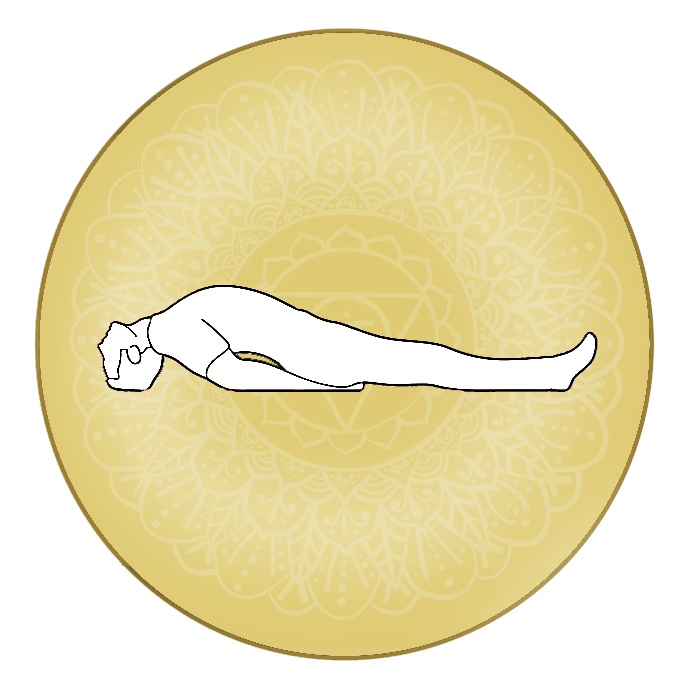
Steps for Fish Pose:
- Lie flat on your back with legs extended and arms resting alongside your body.
- Slide your hands underneath your hips, palms facing down, and bring your elbows closer toward each other.
- Press your forearms and elbows firmly into the mat as you lift your chest upward.
- Gently arch your back and allow the crown of your head to rest lightly on the floor. Your weight should remain mostly on your elbows and not your head.
- Keep your legs active and grounded, with toes pointing forward or feet in a relaxed position.
- Breathe deeply, expanding your chest with each inhale.
- Hold the pose for 5–10 breaths, or as long as is comfortable.
- To exit, press through your elbows, lift your head slightly, and lower your back gently to the mat.
- Rest in Savasana or a neutral reclining position to allow the spine to relax.
DOs and DON’Ts:
DOs:
- Engage your thighs and press them gently into the mat to support the lower spine.
- Keep your breath full and steady, allowing the chest to expand naturally.
- Use a folded blanket or bolster if needed for neck or back support.
- Ensure that the weight remains on the forearms, and not the crown of the head.
- Practice after poses that compress the front body to promote balance.
DON’Ts:
- Don’t drop your head back forcefully. Allow it to rest lightly with support from the arms.
- Don’t hold the pose if you feel strain in your neck or lower back.
- Don’t collapse the chest. Keep lifting through the sternum.
- Don’t practice if you have serious back, neck, or shoulder injuries without professional guidance.
Don’t rush out of the pose. Come out slowly to protect the spine and neck.
Share Pose


