
Step-by-Step Guide:
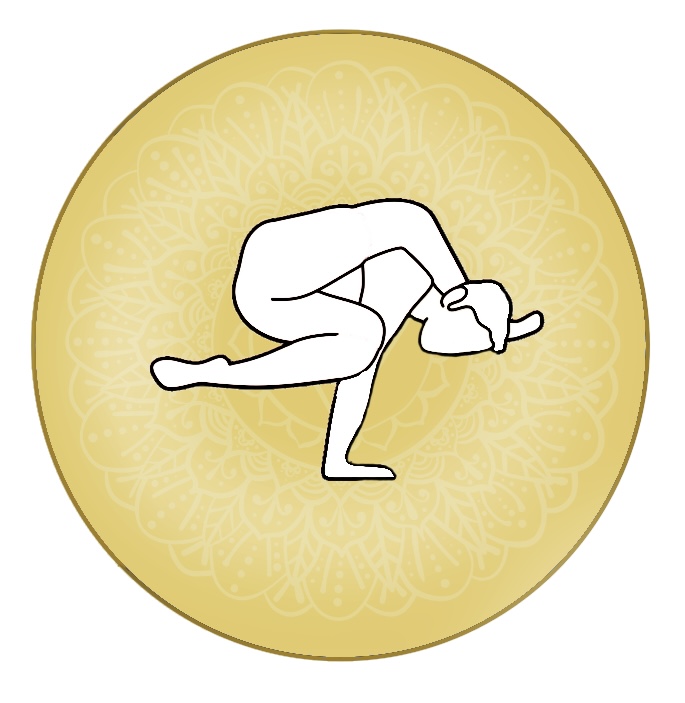
- Stand tall, bend your knees, and place your right ankle on top of your left thigh. Your legs should form a figure-four shape. Bring your hands to your heart center.
- Lean your torso forward and rest your upper arms against your right shin. Keep your back straight and your gaze focused forward.
- Place your palms flat on the floor, shoulder-width apart. Spread your fingers wide and grip the mat for stability.
- Lean your body forward, shifting weight onto your hands. Raise your left foot while balancing the right shin on your arms.
- Engage your core and lift your left leg straight back behind you. Your right leg should stay bent and resting across your arms like a shelf.
- Keep your body tight and balanced. Breathe slowly and stay focused. Hold for a few breaths.
- Gently lower your back foot to the ground, return to standing, and repeat on the other side.
Beginner Tips:
Dos
- You can use yoga blocks beneath your hands to get extra fit.
- Look slightly forward, not down, to keep balance.
- Practice on a non-slip surface with props nearby.
- It’s better to first master other beginning postures like the pigeon pose and the crow pose.
Don’ts
- Don’t force your leg up—hip flexibility takes time.
- Don’t practice with wrist, shoulder, or back injuries.
- Don’t rush the transition or force the pose.
- Don’t neglect core engagement during the balance.
Share Pose


