
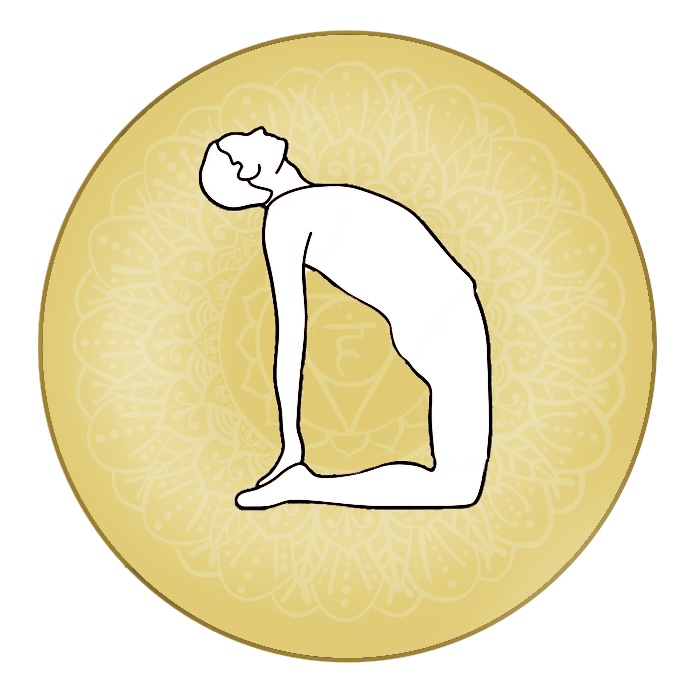
Steps for Camel Pose:
Here is how to practice Camel Pose:
- To begin with, you must kneel on your yoga mat. Ensure your knees are under your hips and your feet are pointed. You can add a blanket or cushion under your knees. Feel free to put yoga blocks on the outer side of your ankles. Make sure your toes are tucked in, too.
- You have to ensure a neutral position for your pelvis, which you can attain by tucking your tailbone. Another way to do so is by pulling your navel on the inside.
- Next, you must inhale, lift your chest, and lengthen through your side waists.
- You must move backward, following the exhalation. When doing this, you must ensure your chest is lifted, but your neck is stable.
- Stay like this and make sure your spine feels comfortable.
- Now, locate your heels with your hands while moving your back backward. Feel free to do it on one side at a single time.
- Make sure your thighs are engaged, and your shoulder blades are firm. Stay like this and take a couple of breaths.
- You can return to the normal position with inhalation. You can sit on your heels and make sure your spine is in a neutral state. Stay like this for a moment.
Dos and Don’ts
Here is a list of Dos and Dont’s for Camel Pose:
Dos:
- You have to make sure that you are breathing normally throughout your practice. Your chest will be stretched already, so you do not have to take deep and long breaths.
- Make sure your pelvis is straight and your lower back is not bent.
- Ensure that the weight is equally supported on your arms and legs.
Don’ts:
- In cases you have sensitivity or tension in the neck, keep it in a neutral position. You can keep your neck towards your chest. You must do so to ensure your neck stays relaxed.
- By any chance, if you have any injury in your back, go ahead with a gentler back bend.
- If you have sensitivity in your knees, you can keep a blanket under them.
Share Pose


