
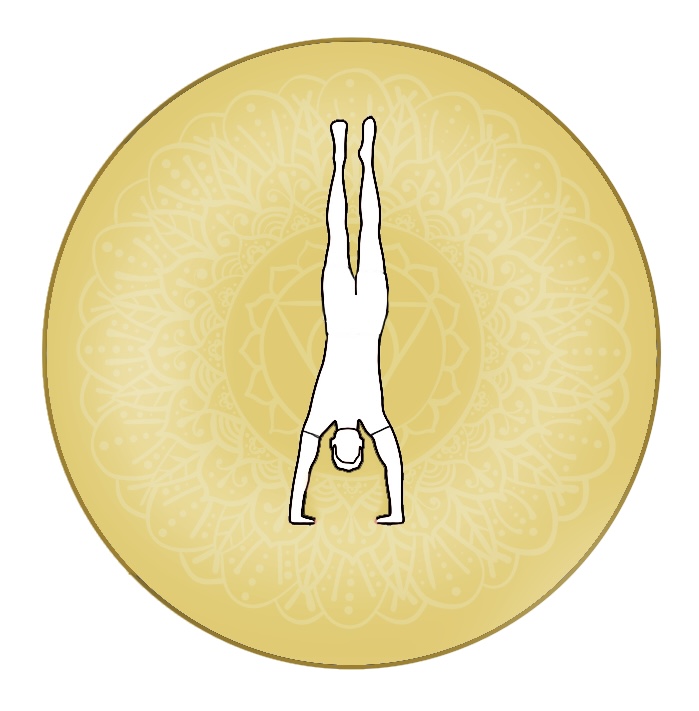
Steps for Handstand Pose:
- Begin in a tabletop position before transitioning into Downward-Facing Dog. Raise your hips upward and backward to create an inverted V formation. Widen your fingers and distribute weight equally across both hands.
- Walk your feet closer to your hands. This brings your hips above your shoulders, which is key to balancing.
- Shift your weight onto your hands. Keep your arms straight and strong like pillars. Look slightly forward between your hands.
- Bend one knee and gently kick up with the other leg. Use the wall behind you for support if needed. Keep kicking gently till your legs are off the ground.
- Once you’re upside down, engage your core and point your toes toward the ceiling. Squeeze your legs together and breathe slowly.
- To exit, slowly lower one leg, then the other. Rest in Child’s Pose to let your body relax.
Dos and Don’ts
Do’s
- Practice against a wall for support and alignment.
- Engage your shoulders and press firmly through your palms.
- Keep your core tight and legs active.
- Warm up wrists, shoulders, and core thoroughly.
Don’ts
- Don’t attempt without proper shoulder and wrist preparation.
- Don’t collapse into your shoulders or let them sink.
- Don’t kick up aggressively or with excessive force.
- Don’t practice with any injuries to the wrist, shoulder, or neck.
Share Pose


