
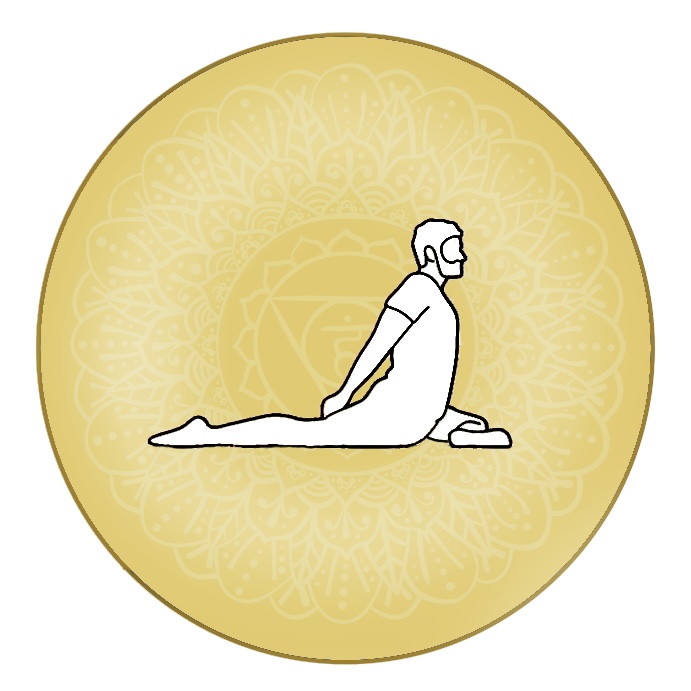
Steps for Pigeon Pose:
- Begin in Downward-Facing Dog.
- Inhale and bring your right knee forward, placing it behind your right wrist.
- Angle your right shin across your mat; your ankle may be near the left hip or parallel to the front edge (depending on flexibility).
- Extend your left leg straight back, with the top of the foot resting on the mat and hips square.
- Keep your hips level and gently press into the floor with your fingertips or hands beside your hips.
- Inhale to lengthen your spine; exhale and slowly walk your hands forward, folding over your front leg.
- Rest your forehead on the mat, stacked hands, or a block.
- Hold the pose for 5–10 deep breaths (or up to a few minutes in a restorative practice).
- To exit, press your hands into your hands, tuck your back toes, and step back to Downward-Facing Dog.
- Repeat on the other side.
DOs and DON’Ts:
DOs:
- Use a blanket or block under the front hip if it doesn’t reach the mat.
- Keep the hips square to avoid collapsing to one side.
- Focus on lengthening the spine while folding forward.
- Keep the back leg extended and aligned, with the kneecap facing down.
- Relax into the pose and breathe deeply to release tension.
DON’Ts:
- Don’t force your front shin to be parallel if your hips aren’t open; allow a natural angle.
- Don’t lean to one side. Distribute your weight evenly between both hips.
- Don’t hold your breath. Conscious breathing is key to softening the stretch.
- Don’t practice if you have recent knee, hip, or lower back injuries without guidance.
Don’t collapse into the shoulders. Keep the chest open and supported if upright.
Share Pose


