
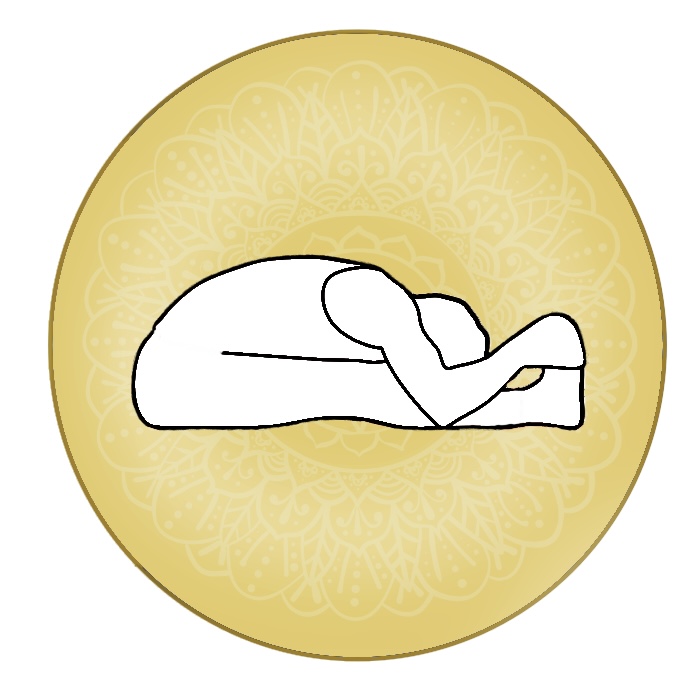
Steps for Seated Forward Bend Pose:
- Begin seated in Staff Pose (Dandasana) with your legs extended straight in front of you.
- Press through your heels while flexing your feet, and maintain a tall spine.
- Inhale and reach both arms overhead, lengthening through the sides of the body.
- Exhale and hinge forward from the hips, not the waist, maintaining a long spine.
- Reach your hands toward your feet. You can hold your shins, ankles, or grasp the sides of your feet, whichever is accessible without rounding the back.
- Keep your neck relaxed and your gaze down toward your legs.
- Remain in the pose for 5–10 breaths, permitting your body to let go more deeply with every exhalation.
- To exit, inhale and gently rise back up to a seated position, bringing the spine upright with control.
DOs and DON’Ts:
DOs:
- As you bend forward, maintain an elongated spine—let your chest lead the movement, not your head.
- Use a yoga strap around the feet if your hands don’t reach.
- Keep knees slightly bent if your hamstrings are tight.
- Relax your shoulders and jaw while holding the pose.
- Practice after warming up the hamstrings for a safer stretch.
DON’Ts:
- Don’t round your spine or force the fold—respect your current flexibility.
- Don’t lock your knees; keep a soft bend to protect the joints.
- Don’t bounce or pull harshly on your legs or feet.
Avoid this pose if you have a recent lower back injury unless guided by a teacher.
Share Pose


